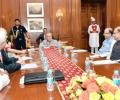
Government will lay greater emphasis on social sectors, finance minister said.

The new rules are aimed at providing a strong impetus to the industry and positioning India as one of the most competitive IT jurisdictions in the world.

After bumbling for years since 2014, the Modi government seems to believe that massive government expenditure will lead us to prosperity supported by 'seat-of-the-pants' decision-making, observes Debashis Basu.

Significant controls and exemptions to the government under the proposed Digital Personal Data Protection bill 2022 are likely to make it harder for companies to invest in data centres and data processing activities in India, according to global technology industry body ITI. The ministry of electronics and IT has floated draft Digital Personal Data Protection (DPDP) Bill 2022 and has invited comments on the same till January 2. "The Bill grants significant controls to the executive arm of GOI (Government of India) and delegates much of the detailed rulemaking authority to separate, as yet undefined processes.

Hospitality players want the government to accord infrastructure status to hotels to make investments on new properties more attractive rather than categorising them as luxury or even 'sin goods' in the upcoming Union Budget considering the sector's potential to play a key role in India's growth. They also want the government to consider incentives in the form of tax breaks or subsidies for adopting sustainable and eco-friendly practices, while asserting that the upcoming budget must accelerate the tourism agenda saying it is an opportunity to make Indian hospitality the emerging engine for GDP growth and employment generation.

Senior citizens of 75 years and above having pension income and interest from fixed deposit in the same bank would not be required to file income tax returns for the financial year beginning April 1.

The Indian startup ecosystem has lauded the inclusion of startups in the New Delhi Leaders' Declaration for the first time ever in the history of G20. Industry stakeholders say that the move will lead to easier access to capital, reduce regulatory hurdles, and may revive funding activity. The Declaration, through the Startup20 initiative, recognised startups as "natural engines of growth" and key to socio-economic transformation by driving innovation and creating employment.
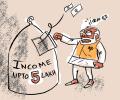
Policymakers are examining the possibility of increasing the tax-free slab to Rs 5 lakh in the two-year-old alternative personal income tax regime to make it attractive, a government official said. At present, taxpayers don't pay income tax if their taxable income is Rs 2.5 lakh and below. Increasing the threshold will reduce the tax outgo for assessees, thereby leaving more money with them to invest, the official said.
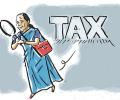
Finance Minister Nirmala Sitharaman on Thursday said taxpayer base has almost doubled to 1.28 crore in four years of rollout of the historic tax reform and the enhanced GST mop up in the recent months should now be the "new normal". In a written message to tax officers on the fourth anniversary of GST rollout, she said implementing any reform of this scale in a large and diverse country like India can be highly challenging, but GST has brought about ease in taxpayer compliance and reduced common man's tax burden.

Gujarat and Karnataka have been ranked as the best performers in developing startup ecosystem for budding entrepreneurs, according to the ranking of states and Union territories by the Department for Promotion of Industry and Internal Trade (DPIIT). Among smaller states having population of less than one crore, Meghalaya has been adjudged as the best performer. The rankings are based on the initiatives taken to develop the startup ecosystem for promoting budding entrepreneurs.

The Department for Promotion of Industry and Internal Trade (DPIIT) will soon start public consultation for a national retail trade policy, which is likely to include an insurance scheme aimed at providing financial protection against losses caused by theft, accidents or natural calamities. The policy will also spell out ways to give traders access to low-cost finance, promote digital inclusion, and create necessary infrastructure to support them, a senior government official told Business Standard. This is expected to offer relief especially to traditional traders, who are facing stiff competition from large e-commerce players.

Construction costs would be reduced to some extent and this benefit can be passed on to the customers, thereby spurring home buying
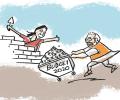
Apart from making your purchases on these platforms expensive, it will also mean sellers will have to face the brunt of reduced cash flows amid already low margins for some. Experts said the proposal, which will take effect on April 1, 2020, and will be inserted as a new section in the Income Tax Act, is expected to affect the working capital of e-commerce companies and reduce cash flows for e-sellers.

The insurance regulator wants the removal of the minimum entry capital requirement of Rs 100 crore for setting up an insurance business in a bid to facilitate the entry of multiple players such as standalone micro insurers and niche players. Debasish Panda, chairman, Insurance Regulatory and Development Authority of India (Irdai), said it should be left to the regulator instead to decide what should be the entry fee for interested players, depending on the size of the business and operations. According to the current norms, insurers are required to have a minimum paid-up capital of Rs 100 crore.
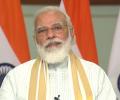
"The emphasis is on making every rule, law, policy people-centric, and public-friendly. This is the use of the new governance model and the country is getting its results," Prime Minister Modi said while speaking at the launch of a platform for 'Transparent Taxation -- Honoring the Honest'.

Small and medium enterprises had complained of tedious compliance burden under the Goods and Services Tax

If left unchecked, the 2024 elections may be infamously remembered as the election of deepfakes. The ECI has a tough task ahead, but, more importantly, it has an opportunity to become a global model for scores of countries going to polls this year, notes Ajay Kumar.

After bumbling for years since 2014, the Modi government seems to believe that massive government expenditure will lead us to prosperity supported by 'seat-of-the-pants' decision-making, observes Debashis Basu.

From toys, footwear and furniture to insulated flasks, smart meters, and air coolers - the Central government over the last decade has mandated higher standards for production and imports of such items. Sample this: Till 2014, there were 14 Quality Control Orders (QCOs) covering 106 products. By the latest count, there are 156 QCOs on 672 products.

The government's plan to mop-up additional revenue from indirect tax may not materialise

This alternative is being planned as the existing projects continue to be delayed due to land acquisition troubles. The ministry is thinking of adding new track lines to its existing eastern and western DFCs passing major areas in the proposed stretches, senior officials said.

Prime Minister Narendra Modi on Tuesday asked the Bharatiya Janata Party-ruled states to carve a niche for their governments in some or other sector of governance and called for giving topmost priority to 'ease of living' of people.

Inter-state supply may come under GST composition

To strengthen corporate governance practices and disclosure requirements, Sebi on Thursday decided that top-1,000 listed firms should formulate a dividend distribution policy.

For the startup ecosystem in India, the scorecard so far has been a mixed bag, observes Akhil Gupta.
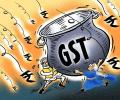
Economic Advisory Council to the Prime Minister (EAC-PM) chairman Bibek Debroy on Tuesday said the government was losing revenue due to the GST, which should be revenue neutral with a single rate. Speaking at an event organised by the Calcutta Chamber of Commerce in Kolkata, he however said that GST has led to a lot of simplification. "The ideal GST is one that has a single rate, and it was meant to be revenue neutral.
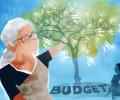
Finance Minister Nirmala Sitharaman will present the Union Budget for 2023-24 in Parliament on February 1. The Budget is a statement of the government's estimated receipts and expenditures for a fiscal year (April 1 to March 31). It's divided into Revenue and Capital Budget. The Revenue Budget includes the government's revenue receipts and expenditures while the Capital Budget includes its capital receipts and payments.

The government on Friday extended he deadlines for various income tax compliances and said the amount paid by an employer to employees for Covid-19 treatment would be tax exempt.

The governments of Karnataka, Uttar Pradesh and Rajasthan want a lower limit of Rs 100,00,00 gross annual turnover.
The share of non-resident Indians (NRIs) and overseas investors in Indian mutual funds has been declining over time, despite adding half-a-trillion rupees to holdings over the last five years. Mutual fund holdings for the segment went up from Rs 0.95 trillion as of December 2018 to Rs 1.54 trillion as of December 2022, shows Business Standard analysis of data from the industry body Association of Mutual Funds in India (Amfi). Their share in overall mutual fund assets has fallen from 4.2 per cent to 3.9 per cent during the same period.

Many industry executives have said the draft e-commerce policy is being perceived as nationalistic but not overly protectionist and it is providing preference to Indian players against foreign companies. This might have an impact on investment by large players such as Walmart and Amazon in the country, said the executives. They said e-commerce was a very small portion of the retail industry and at a nascent stage and did not require heavy hammer regulations. Though the policy talks about being equally applicable to foreign and domestic players, it mentions that foreign direct investment (FDI) takes precedence over the e-commerce policy in any area of overlap.

"We now realise that the so-called farmer agitation hardly remains a farmers' agitation. It has almost got infiltrated by Leftist and Maoist elements, a flavour of which we saw over the last two days when there were extraneous demands to release people who have been put behind bars for anti-national (and) who have been put behind bars for illegal activities," Goyal, the Minister for Railways, Commerce and Industry and Food and Consumers Affairs, said at FICCI's annual meeting.

Within the next two years, verification and scrutiny of returns will happen electronically through anonymised back offices manned by tax experts and officials. It will function without any personal interface between taxpayers and tax officers. Both the taxpayer and the tax officer will not know each other -- who is scrutinising whose return, and at which place, points out Kuldip Kumar, partner and leader personal tax, PwC.

'I found it unbelievable that L&T said 45,000 jobs were waiting to be filled because of unavailability of suitable skillsets.' 'So, when the Opposition sweepingly says there are no jobs, I'm sorry... I'm not saying it's raining jobs, but there are jobs. The (skill) gap has to be bridged.'

The Chinese dependence is far from over, industry players are also citing a shortage of electronic toys in the country.

Sources said GST exemption on such items would lead to blocked input tax credit, thereby increasing the cost of manufacturing and a higher price for consumers.

The USIBC has encouraged a streamlined implementation of the GST.

"India is the best market right now in the world with the digital initiatives the government has implemented

It aims at tackling issues such as child labour, mistreatment of workers, and denial of basic wages, among others. There will also be penalties for non-compliance.

The results of the assembly elections in Gujarat and Himachal Pradesh are likely to play out during the winter session of Parliament beginning Wednesday.
